Yang Lab · School of Life Sciences and Technology · Tongji University, Shanghai
We learned how proteins read the genome. Now we design them.
Our lab uncovered how KRAB zinc-finger proteins recognise and silence ancient viral DNA in mammalian genomes. We are now building on that work with computational enzyme design and electrochemical sensors for continuous glucose (CGM) and ketone (CKM) monitoring.
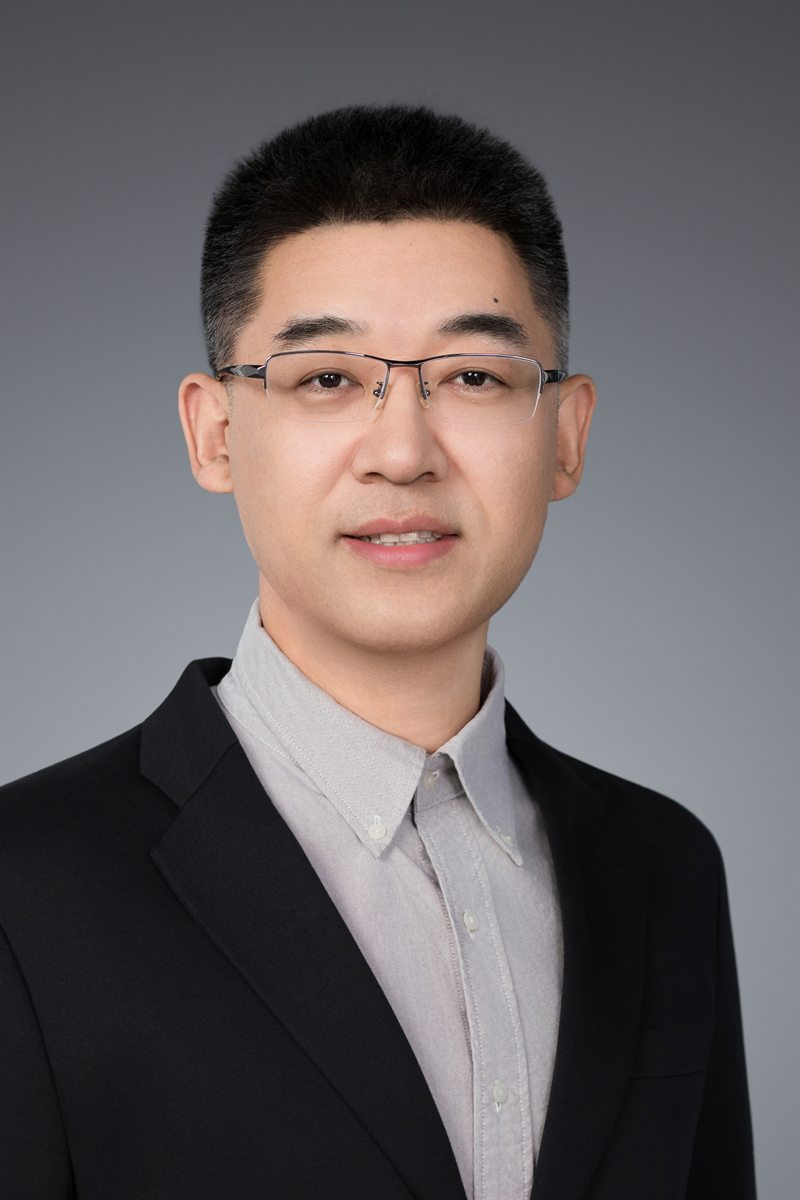
Tenured Professor, School of Life Sciences and Technology, Tongji University
Peng Yang trained at Nanjing University and Peking University, with postdoctoral work at HHMI and the U.S. National Institutes of Health. He started his lab at Tongji University in 2018. His first-author and co-first-author papers in Science and Cell showed how KRAB zinc-finger proteins regulate fetal and placental growth and how they recognise DNA. As corresponding author, his lab has since published on retroviral defense in PNAS, Nucleic Acids Research, Cell Research and Science Bulletin.
We welcome collaboration with companies working on continuous glucose and ketone monitoring, biosensor enzymes and enzyme engineering. We are open to sponsored research, joint development and technology licensing.
CGM and CKM sensorsElectrochemical glucose and ketone sensing, including our project on NAD⁺ loss and signal drift
Enzyme designMore stable and active glucose oxidase, glucose dehydrogenase and β-hydroxybutyrate dehydrogenase
Zinc-finger proteinsDNA-binding proteins, epigenetic regulation and the ZRdb database
Join us
We are recruiting.
We are looking for postdoctoral fellows, graduate students and undergraduate interns who want to work where molecular biology, computation and engineering meet.
Enzyme design: structure prediction, generative models or Rosetta, enzyme kinetics, or a strong interest in learning them
Electrochemistry and biosensors: electrode fabrication, enzyme immobilisation, potentiostat measurements
Molecular and stem-cell biology: protein expression, CRISPR, sequencing, embryology
Please send a CV, a short statement of interest and the names of two referees
Research
From reading proteins to writing them
For a decade we have studied how zinc-finger proteins recognise DNA and defend the genome. We are now using that understanding to design enzymes and to build electrochemical sensors that monitor metabolism continuously.
About 8% of the human genome is made of ancient retroviruses that once infected the germ line of our ancestors. These endogenous retroviruses (ERVs) still carry promoters, enhancers and the tRNA primer-binding sites (PBS) that viruses use to start reverse transcription. If they are not kept in check, they can disrupt genes and destabilise the genome.
Mammals control them with KRAB zinc-finger proteins (KZFPs). With about 350 members, this is the largest family of transcription factors in the human genome. Each KZFP reads a specific DNA sequence with a tandem array of zinc fingers. Its KRAB domain then recruits KAP1 and the H3K9 methyltransferase SETDB1, which pack the target into silent heterochromatin.
We have identified which zinc-finger proteins recognise which viral elements and solved how long finger arrays read DNA. We have also shown that the same machinery was co-opted to control embryonic and placental growth.
A short film about our published work, narrated in English.
A KZFP's zinc fingers recognise a sequence inside an ERV, here the tRNA primer-binding site (PBS). Its KRAB domain recruits KAP1 and SETDB1, which add H3K9me3 marks and pack the element into silent heterochromatin. Schematic, not to scale.
Our structures of ZFP568 showed how precisely, and how flexibly, a protein can recognise its target. Enzymes add one more demand. They must hold a substrate and a cofactor in exactly the right geometry to make chemistry happen, and keep doing so under harsh conditions.
We use generative AI and structure prediction to redesign existing enzymes and create new ones. We start from the reaction: the substrate, the cofactor and the catalytic geometry. Diffusion models build backbones around that active site, inverse-folding networks write the sequences, and structure prediction filters the designs before we test them. In-house GPU computing sits next to our expression and enzyme-assay pipeline, so every round of designs is tested quickly and the results feed back into the next.
A short film about our enzyme design program, narrated in English.
Specify
Define the reaction: substrate, cofactor and catalytic geometry.
Generate
Diffusion models build protein backbones around the active site.
Sequence
Inverse-folding networks design sequences that hold the catalytic residues in place.
Filter
Structure prediction checks the fold and the active-site geometry.
Test and learn
Express and purify the designs, then measure activity and stability. The results feed the next round.
Enzymes for biosensorsGlucose oxidase, glucose dehydrogenase and β-hydroxybutyrate dehydrogenase variants that stay active for weeks at body temperature on an electrode. This work links directly to our CGM and CKM program.
Cofactors and electron transferTuning how enzymes bind their cofactors (FAD, NAD⁺) and pass electrons to a mediator or electrode.
New activitiesRedesigned and new enzymes for substrates and reactions that natural enzymes handle poorly.
This program is new. We will post results here as they are published.
03
New direction
Electrochemical CGM and CKM
More than half a billion adults worldwide live with diabetes. Continuous glucose monitors (CGMs) have transformed their care: a thin, enzyme-coated filament under the skin reads glucose in interstitial fluid every few minutes.
Glucose is only half the picture, though. A rise in the ketone β-hydroxybutyrate (BHB) is the earliest warning of diabetic ketoacidosis, a life-threatening emergency. The risk is especially high after insulin-pump failure and during SGLT2-inhibitor therapy. Continuous ketone monitoring (CKM) aims to catch that rise as it happens, instead of at the next finger-prick test.
Both sensors are electrochemical. An enzyme oxidises its target, and the released electrons are carried to an electrode, so the current is proportional to concentration.
Ketone sensing has a specific weakness. β-Hydroxybutyrate dehydrogenase cannot work without its cofactor NAD⁺, and in today's CKM sensors NAD⁺ gradually leaches out of the sensing layer. As the cofactor is lost, sensitivity falls and the signal drifts over the days of wear.
A short film about our CGM and CKM program, narrated in English.
Left: a CGM or CKM filament sits in interstitial fluid under the skin. Right: inside the sensing zone, enzymes oxidise glucose or β-hydroxybutyrate, and the electrons reach the electrode directly or through a redox mediator. Illustrative schematic.
Stability
Enzymes that last two weeks
Sensors must work for 14 days or more at 37 °C. Our enzyme design work aims to make the enzymes survive that long.
Electron transfer
Mediators and wired enzymes
Redox mediators, enzyme-wiring hydrogels or direct electron transfer remove the dependence on oxygen and keep the signal stable.
Selectivity
Rejecting interferents
Outer membranes and low operating potentials keep ascorbate, urate and acetaminophen from distorting the reading.
Dual sensing
Glucose and ketones together
One filament that reads both analytes, so a dangerous combination is flagged as soon as it appears.
This program is new. We will post results here as they are published.
Publications
Papers
Peer-reviewed work by Peng Yang. Each entry gives a short summary and his role on the paper; full author lists are on the publisher's page. For an up-to-date record, see ORCID or Google Scholar.
Presents ZRdb, our database of human KZFPs and repeats (LTR, SINE, LINE and SVA elements). It combines KZFP sequences, domains and DNA-binding motifs with published ChIP-seq data, then maps and ranks by reliability which KZFPs bind and repress which retrotransposons and how the two families co-evolved.
Identifies ZNF506 as the human KZFP that binds the proline tRNA primer-binding site (PBS-Pro) and silences retroviruses that use it. ZNF506 evolved independently of the mouse protein ZFP809, which does the same job. The study also explores a link between ZNF506 and leukemia.
Proceedings of the National Academy of Sciences USA 2022, 119(11): e2119415119
Combines a survey of PBS loci within ERVs with KZFP ChIP-seq to find zinc-finger proteins that target specific primer-binding sites. Mouse ZFP961 and human ZNF417/ZNF587 bind PBS-Lys, the site used by HIV-1. They repress retroviral integration and transcription, and losing them makes cells more susceptible to HIV-1.
Identifies ALPPL2 as a surface marker specific to naive human pluripotency. ALPPL2 is needed to establish and maintain the naive state, and works by stabilising the mRNAs of key naive transcription factors.
Shows that in mouse embryos the transcription factor Dux enhances zygotic genome activation at the 2-cell stage rather than starting it. Dux must also be degraded promptly, because prolonged expression stalls development.
Crystal structures of the eleven-finger ZFP568 array bound to its 24-bp target in the Igf2 promoter. Single fingers contact 2–4 bases and read thymine on the opposite strand, and an AT-rich stretch narrows the minor groove. Zinc-finger arrays therefore adapt to DNA shape instead of following a strict one-finger, three-base code.
ZFP568, a member of the KRAB zinc-finger family best known for silencing retroelements, directly represses a placenta-specific Igf2 transcript (Igf2-P0). Deleting Igf2 rescues the gastrulation failure of Zfp568-null embryos, which reveals a new layer of control over the main fetal growth hormone.
A review of how KRAB-ZFPs recognise and silence transposable elements, the arms-race model of their evolution, and how some were domesticated for host innovations such as imprinting, recombination hotspots and placental growth.
ZFP809 starts sequence-specific silencing of endogenous retroviruses during embryonic development by recruiting heterochromatin-forming complexes. It becomes largely dispensable in somatic tissues.
An essay on how maternal histone variants and their chaperones reprogram the paternal genome after fertilisation, and how this knowledge could improve somatic cell reprogramming.
RCOR2 forms a complex with the demethylase LSD1 in embryonic stem cells and is needed for pluripotency. It can also replace SOX2 when somatic cells are reprogrammed to induced pluripotency.
Tenured Professor and PhD Supervisor School of Life Sciences and Technology, Tongji University
Biography
Peng Yang studies how KRAB zinc-finger proteins (KZFPs) recognise DNA and how they control transposable elements, imprinted genes and early embryonic development. As a postdoctoral fellow at the U.S. National Institutes of Health he showed that the KZFP ZFP568 silences a placenta-specific Igf2 transcript and so regulates fetal and placental growth (Science 2017, first author). He also solved, with collaborators, how its eleven-finger array adapts to the shape of DNA (Cell 2018, co-first author).
Since establishing his laboratory at Tongji University in 2018, he has identified human and mouse KZFPs that target the tRNA primer-binding sites of endogenous and exogenous retroviruses, including the PBS-Lys site used by HIV-1. This work, together with a study of embryonic genome activation, appeared in PNAS, Nucleic Acids Research, Science Bulletin and Cell Research, with him as corresponding or co-corresponding author. He has led more than ten million RMB in competitive research funding, including five National Natural Science Foundation of China grants, a National Key R&D Program project and two Shanghai municipal projects.
The lab is now expanding into computational enzyme design and electrochemical biosensors for continuous glucose and ketone monitoring.
Appointments
Professor (now tenured), PhD SupervisorSchool of Life Sciences and Technology, Tongji University, Shanghai
Postdoctoral FellowNational Institutes of Health, USA
Postdoctoral FellowHoward Hughes Medical Institute, USA
Research AssociateNational Institute of Biological Sciences, Beijing
Education
Ph.D.Peking University
B.S.Nanjing University
Honors and awards
Shanghai Shuguang ScholarShanghai Municipal Education Commission
National High-Level Young Talents Program15th cohort
Shanghai High-Level Talents Program8th cohort
Young Chief Scientist, National Key R&D ProgramSpecial program on Stem Cell and Translational Research, Ministry of Science and Technology
Shanghai Rising-Star ProgramScience and Technology Commission of Shanghai Municipality
Professional service
Committee member, Epigenetics BranchGenetics Society of China
Committee member, Chromatin Biology BranchChinese Society for Cell Biology
Grant and talent-program reviewNational Key R&D Program panels; National Natural Science Foundation of China; Ministry of Education Young Changjiang Scholars program
Selected publications
Exploration of evolutionary mechanisms shaping KZFP and retrotransposon interactionsScience Bulletin 70: 328–332 · corresponding author
Unraveling the role of ZNF506 as a human PBS-pro-targeting protein for ERVP repressionNucleic Acids Research 51: 10309–10325 · corresponding author
Species-specific KRAB-ZFPs function as repressors of retroviruses by targeting PBS regionsPNAS 119: e2119415119 · corresponding author
Precise temporal regulation of Dux is important for embryo developmentCell Research 29: 956–959 · co-corresponding author
DNA conformation induces adaptable binding by tandem zinc finger proteinsCell 173: 221–233 · co-first author
A placental growth factor is silenced in mouse embryos by the zinc finger protein ZFP568Science 356: 757–759 · first author
The role of KRAB-ZFPs in transposable element repression and mammalian evolutionTrends in Genetics 33: 871–881 · first author
RCOR2 is a subunit of the LSD1 complex that regulates ESC property and substitutes for SOX2 in reprogramming somatic cells to pluripotencyStem Cells 29: 791–801 · first author